10 Beautiful Quotes From Quran
10 Beautiful Quotes From Quran
The Quran is a divine source of wisdom that continues to inspire hearts across generations. Its verses offer guidance on faith, patience, compassion, and the true purpose of life. Many people turn to its teachings for comfort, clarity, and spiritual strength during both joyful and difficult moments. In this collection of 10 beautiful quotes from the Quran, you will discover powerful reminders that encourage reflection and inner peace. These selected verses highlight the importance of kindness, trust in Allah, and moral values that shape a meaningful life. Each quote carries timeless lessons that help strengthen belief and deepen one’s connection with the Creator and His guidance.
Thank you for reading this post, don't forget to subscribe!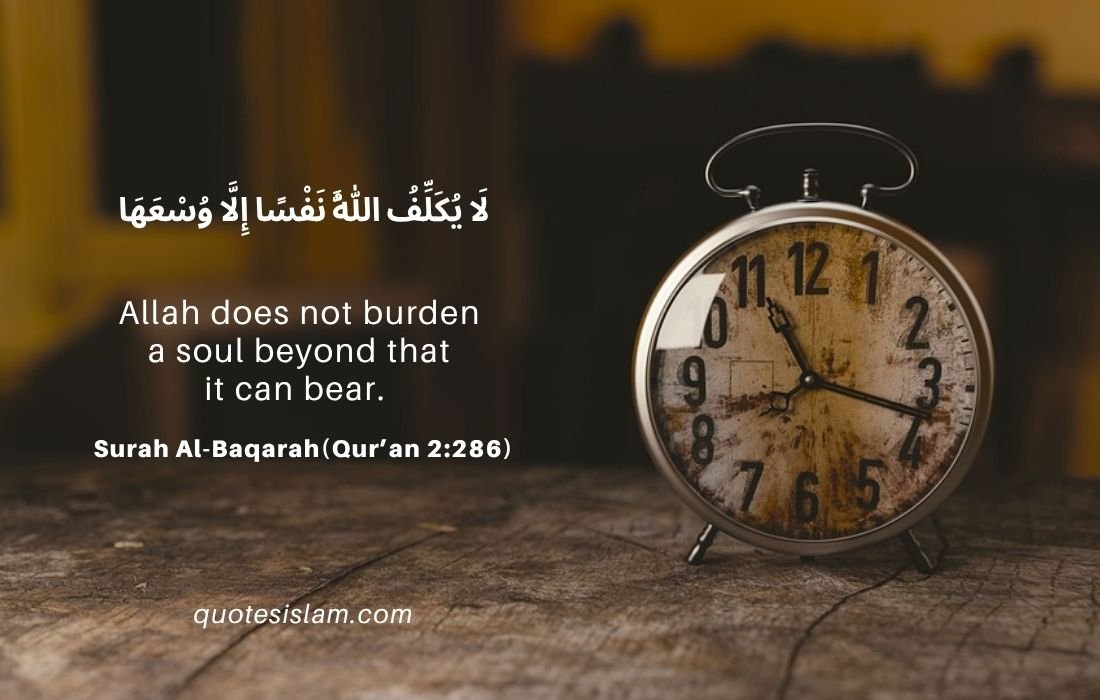
“Allah does not burden a soul beyond that it can bear.”
“اللہ کسی جان کو اس کی برداشت سے زیادہ تکلیف نہیں دیتا۔”
Tafsir:
This part of the verse highlights a core principle in Islam: Allah’s justice and mercy are perfectly balanced. Every test, hardship, or responsibility given to a person is within their capacity to handle—nothing is random or unfair.
Scholars of tafsir explain that:
- Trials are tailored: Each person is tested according to their strength, faith, and ability. What seems overwhelming is still within your unseen capacity.
- Accountability is fair: A person is only responsible for what they are capable of doing. Islam does not demand the impossible.
- Hardship has wisdom: Difficulties are not punishments alone—they can be a means of growth, purification, and drawing closer to Allah.
- Relief is promised: The same Allah who gives the test also provides strength, patience, and eventually ease.
This verse also reminds believers that even when life feels unbearable, there is hidden strength within them—granted by Allah—to endure and overcome.
Reflection
Think about your past struggles—you have already survived them all. This is a living proof of this ayah: whatever you face now is something you are capable of getting through, with patience and trust in Allah.
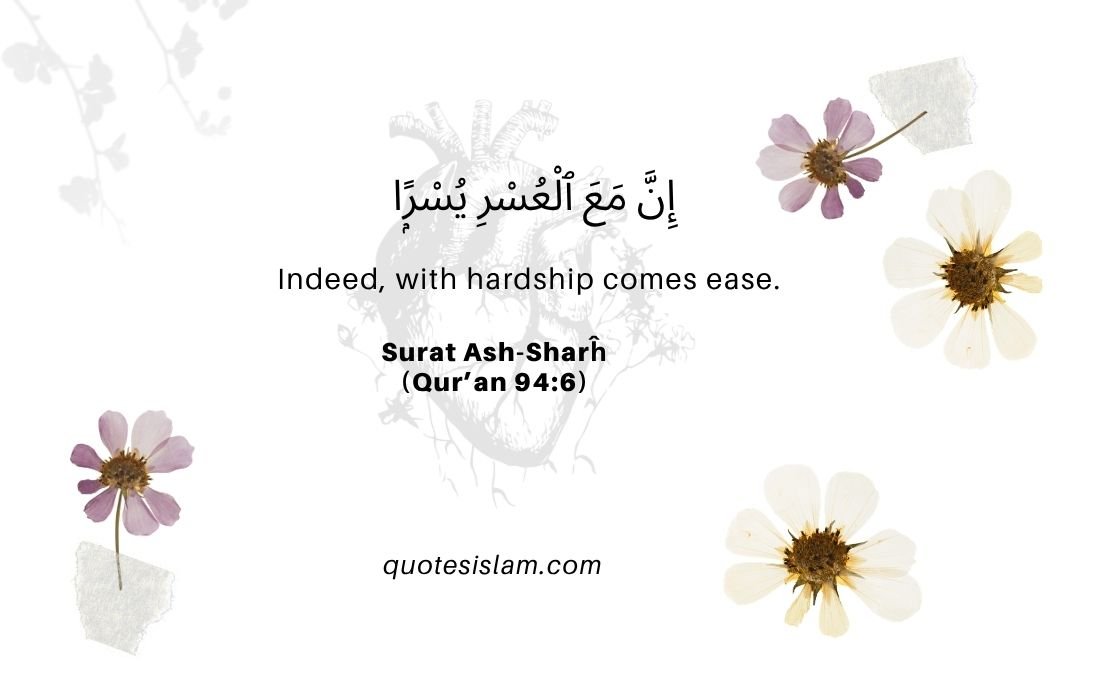
“Indeed, with hardship comes ease.”
’’بے شک مشکل کے ساتھ آسانی آتی ہے۔‘‘
Tafsir:
This powerful verse is a message of hope and reassurance from Allah. It emphasizes that difficulty and ease come together, not separately.
Key insights from tafsir:
- Ease accompanies hardship: The word “ma‘a” (with) shows that relief is already present alongside the difficulty—not only after it ends.
- Repeated for emphasis: This message is mentioned twice in the same surah (94:5–6), highlighting certainty and importance.
- One hardship, multiple eases: Scholars explain that the hardship is mentioned in a definite form, while ease is indefinite—implying that one hardship can be followed by many forms of ease.
- A test, not a punishment: Challenges are part of life’s journey, meant to strengthen faith, patience, and reliance on Allah.
Reflection
No matter how heavy a situation feels, ease is already being prepared for you. This verse reminds us to hold onto hope—because relief is not just coming, it is already near.
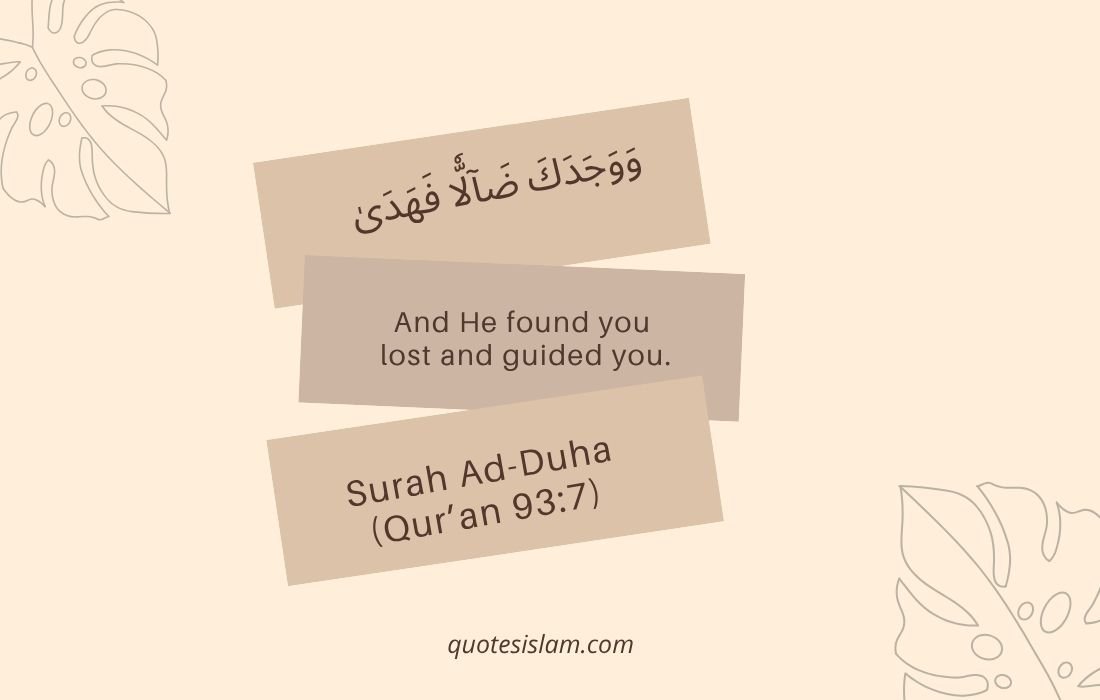
“And He found you lost and guided you.”
“اور اس نے آپ کو کھویا ہوا پایا اور آپ کی رہنمائی کی۔”
Tafsir:
This verse is part of Allah’s comforting words to Prophet Muhammad ﷺ, reminding him of the blessings and guidance he has received.
Key insights from tafsir:
- “Lost” does not mean misguidance in sin: Scholars explain that it refers to being unaware of divine revelation before prophethood—not being astray in belief or character.
- Guidance is a divine gift: Allah guided the Prophet ﷺ to truth, revelation, and the straight path—showing that true guidance comes only from Him.
- A reminder of past blessings: This verse encourages reflecting on how Allah has helped and guided us through confusion, uncertainty, or difficult phases in life.
- Hope for everyone: Just as Allah guided before, He can guide again—no matter how lost someone feels.
Reflection
Think back to moments when you felt unsure, confused, or directionless—yet somehow things became clear. This is a reminder that guidance comes from Allah, and He never leaves a sincere heart without direction.
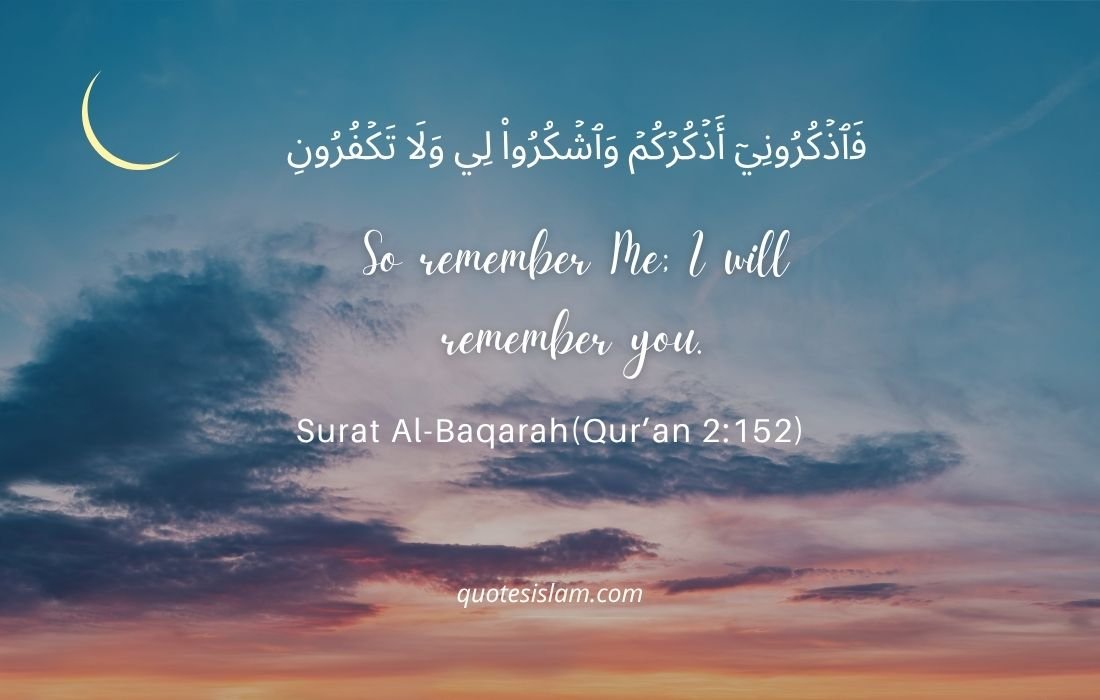
“So remember Me; I will remember you.”
’’پس مجھے یاد کرو میں تمہیں یاد کروں گا۔‘‘
Tafsir:
This verse highlights the powerful connection between a believer and Allah through remembrance (dhikr).
Key insights from tafsir:
- Mutual remembrance: When a person remembers Allah—through prayer, dua, or ذکر—Allah mentions that person in a far greater and more honorable way.
- Closeness to Allah: This promise shows how قريب Allah is to His servants; even a small act of remembrance brings divine attention and mercy.
- Gratitude is essential: The verse links remembrance with thankfulness, teaching that true faith includes recognizing and appreciating Allah’s blessings.
- Warning against neglect: Forgetting Allah leads to spiritual emptiness, while remembering Him fills the heart with peace and purpose.
Reflection
Even a simple “SubhanAllah” or “Alhamdulillah” connects you to your Creator. Imagine—when you remember Allah, He remembers you. There is no greater honor than that.
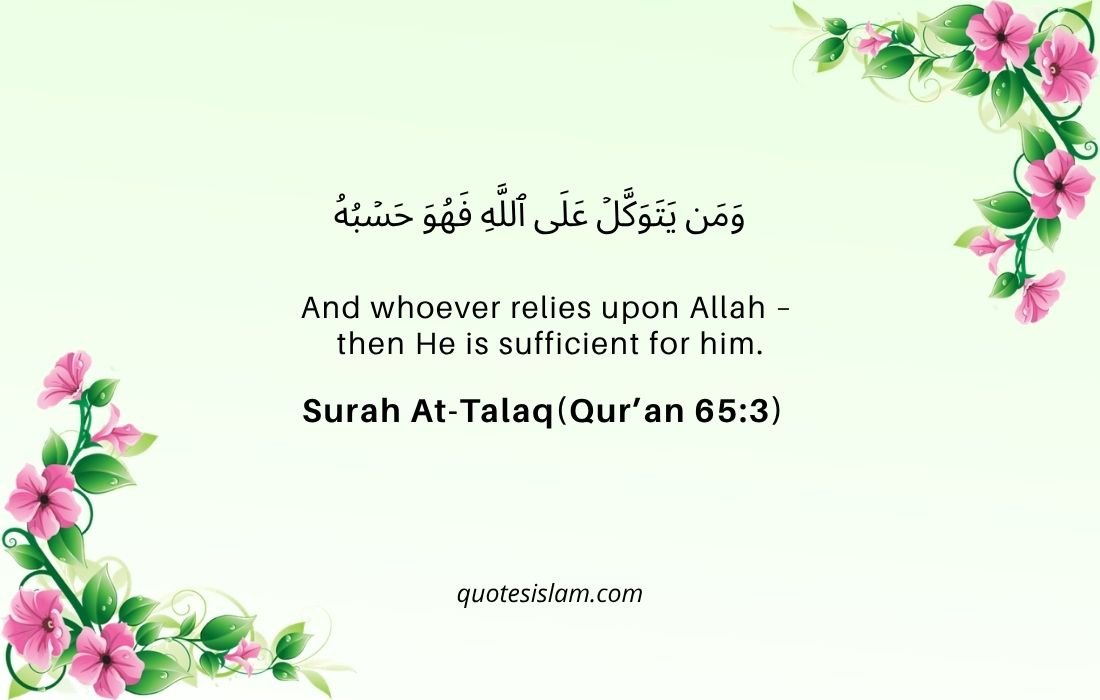
“And whoever relies upon Allah – then He is sufficient for him.”
“اور جو اللہ پر بھروسہ کرتا ہے تو وہ اس کے لیے کافی ہے۔”
Tafsir:
This verse beautifully explains the concept of tawakkul (trust in Allah).
Key insights from tafsir:
- True reliance (Tawakkul): It means trusting Allah completely while still making effort. A believer does their best and leaves the results to Him.
- Allah is enough: “He is sufficient” means Allah will provide, protect, and manage your affairs in the best way—even if it’s not what you expected.
- Divine plan is perfect: Allah’s plans always come to completion. Nothing can stop what He has decreed.
- Everything has a measure: Every situation, delay, or outcome happens according to Allah’s precise timing and wisdom.
Reflection
Sometimes things don’t go as planned, but this verse reminds us that Allah is in control. When you truly rely on Him, you realize you don’t need to control everything—because He is enough.
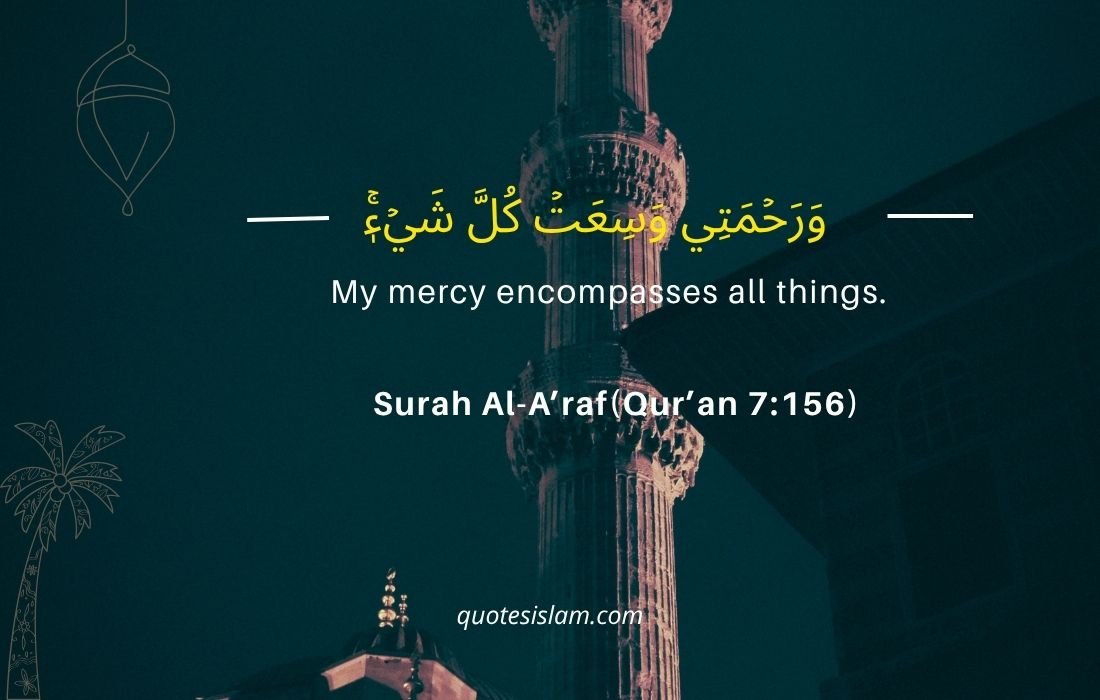
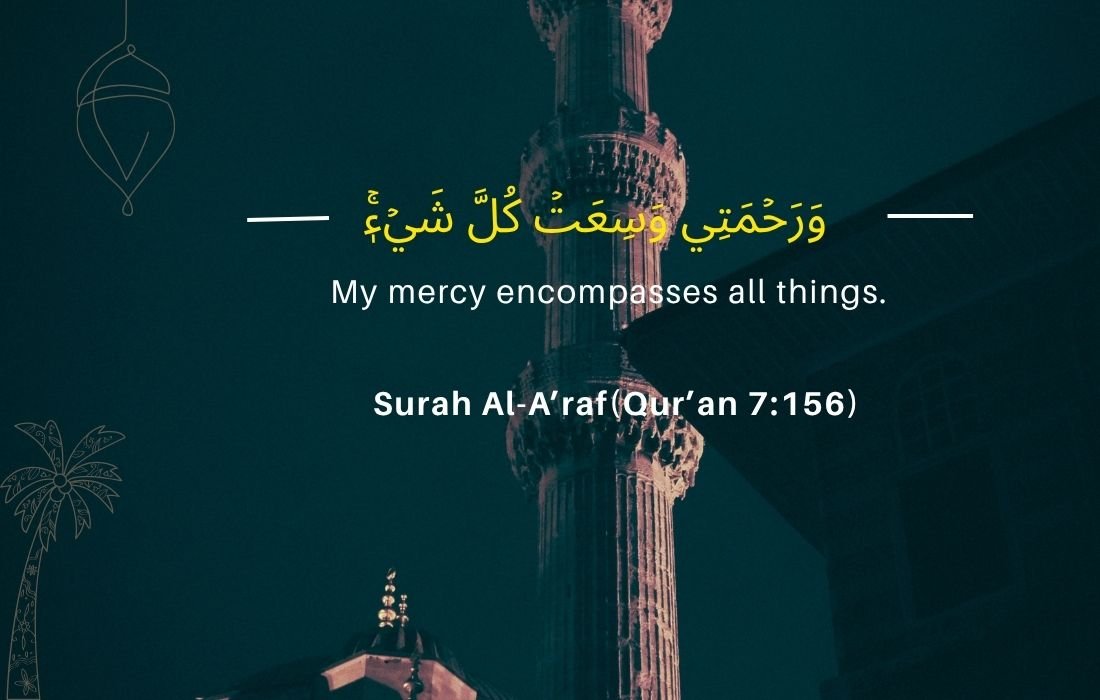
“My mercy encompasses all things.”
“میری رحمت ہر چیز پر محیط ہے۔”
Tafsir:
This verse highlights the vastness and completeness of Allah’s mercy.
Key insights from tafsir:
- Unlimited mercy: Allah’s mercy covers everything—every creation, every situation, and every moment. Nothing exists outside of it.
- For believers and beyond: In this world, His mercy reaches all people—believers and non-believers alike—through blessings, sustenance, and opportunities.
- Special mercy for the righteous: The continuation of the verse explains that a special form of mercy is reserved for those who have faith, fear Allah, and do good deeds.
- Hope for all: No matter how great a person’s sins may be, Allah’s mercy is always greater, encouraging repentance and turning back to Him.
Reflection
No matter how far you feel, you are never outside Allah’s mercy. This verse is a reminder that hope should never fade—because His mercy surrounds you at all times.
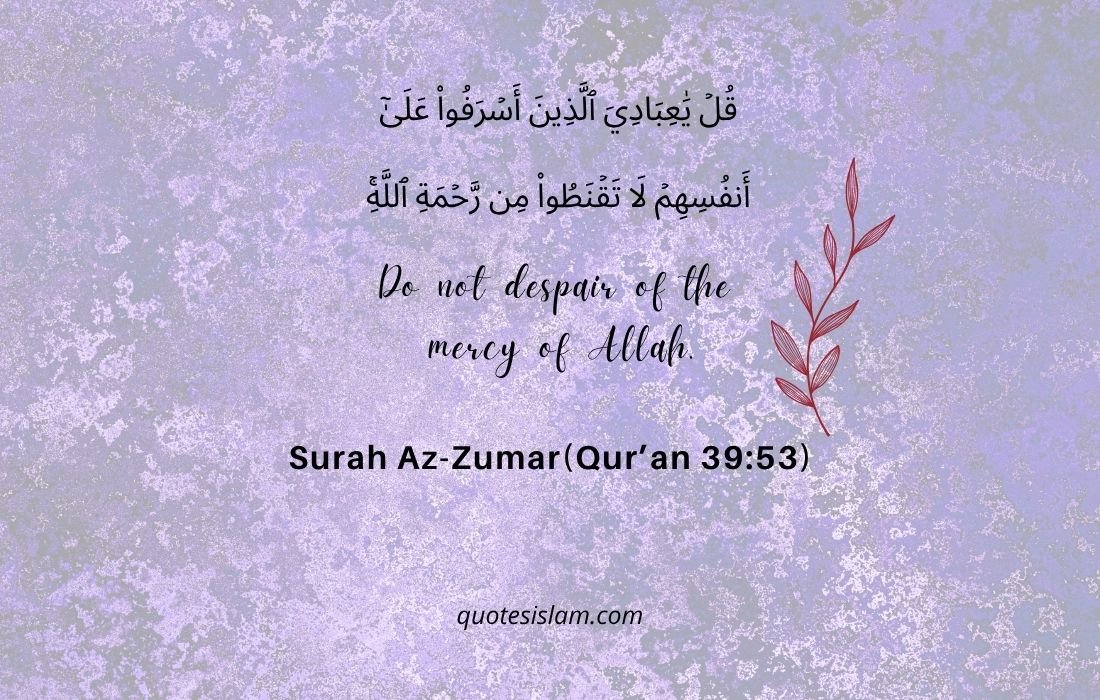
“Do not despair of the mercy of Allah.”
“اللہ کی رحمت سے مایوس نہ ہو”
Tafsir:
This verse is one of the most hopeful and comforting messages in the Quran, خطاب directly to those who feel burdened by their sins.
Key insights from tafsir:
- A message to sinners: Allah lovingly addresses those who have gone beyond limits, showing that no one is beyond His mercy.
- No sin is too great: “Allah forgives all sins” means that any sin can be forgiven with sincere repentance.
- Despair is discouraged: Losing hope in Allah’s mercy is itself a serious mistake—believers are always encouraged to remain hopeful.
- Return to Allah: The verse invites people to turn back, seek forgiveness, and begin again with a clean heart.
Reflection
No matter what you’ve done or how far you feel, Allah’s mercy is always greater. This verse reminds us that it’s never too late to return—hope should always be stronger than regret.
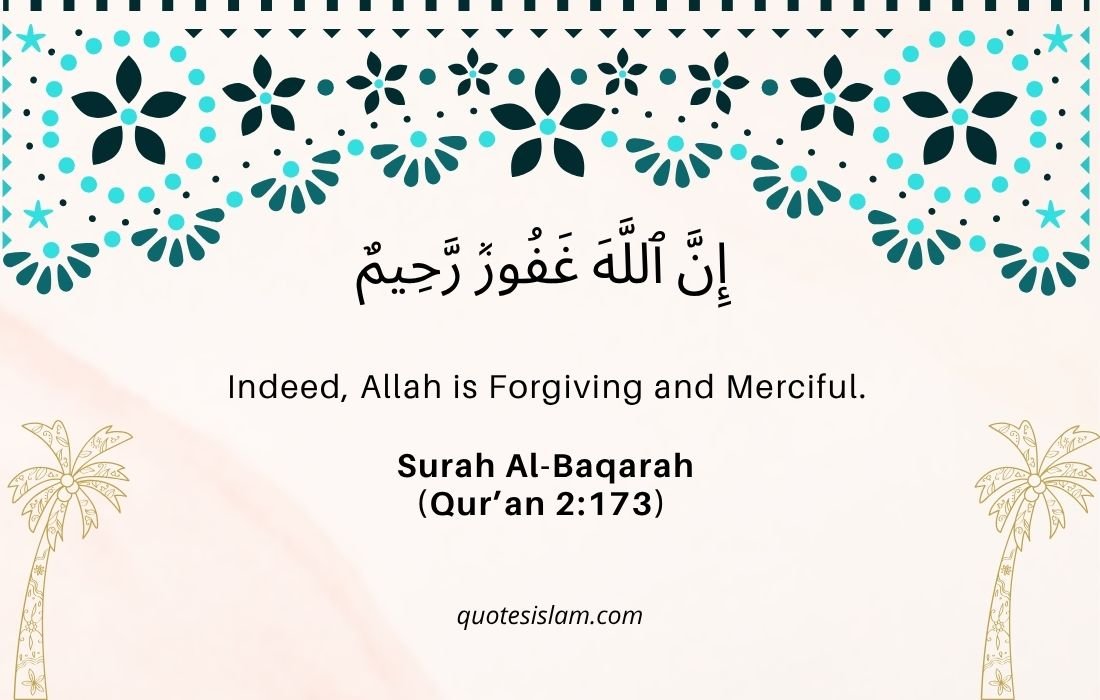
“Indeed, Allah is Forgiving and Merciful.”
’’بے شک اللہ بخشنے والا اور رحم کرنے والا ہے۔‘‘
Tafsir:
This verse combines Islamic law with Allah’s mercy, showing balance between rules and compassion.
Key insights from tafsir:
- Clear boundaries: Allah outlines certain foods that are prohibited to protect physical and spiritual well-being.
- Ease in hardship: In cases of extreme necessity (such as starvation), even prohibited things become permissible to preserve life.
- No burden beyond capacity: Islam is a practical religion—it does not impose hardship when survival is at stake.
- Forgiveness and mercy: The verse ends by reminding that Allah is always forgiving and merciful, especially when a person is forced into a difficult situation.
Reflection
Islam is not about strictness without understanding—it is a religion of balance. Even in rules, Allah provides ease, showing that His mercy always accompanies His commands.
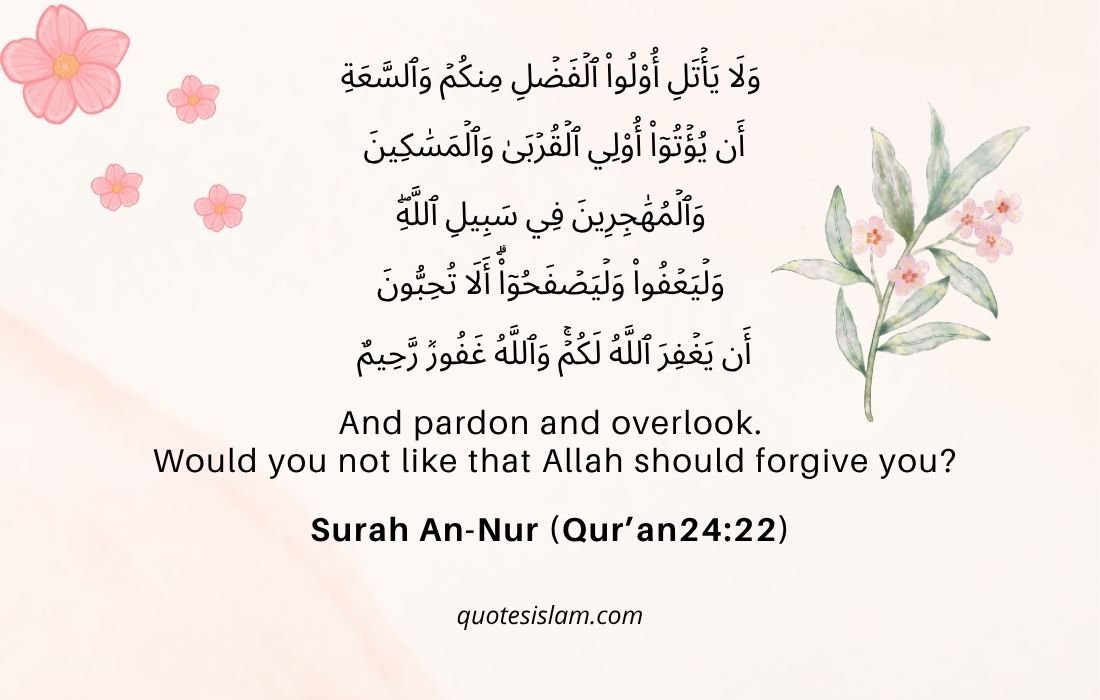
“And pardon and overlook. Would you not like that Allah should forgive you?”
“اور درگزر کرو اور درگزر کرو، کیا تم پسند نہیں کرتے کہ اللہ تمہیں معاف کر دے؟”
Tafsir:
This verse teaches a powerful lesson about forgiveness, generosity, and purity of heart.
Key insights from tafsir:
- Context of the verse: It was revealed regarding a companion who stopped helping a relative after being hurt by him. Allah instructed him—and all believers—to continue kindness despite personal pain.
- Forgiveness over resentment: “Pardon and overlook” means to forgive sincerely and let go of grudges, even when it is difficult.
- A powerful motivation: Allah connects forgiving others with receiving His forgiveness—reminding us that we all need His mercy.
- Excellence in character: True faith is shown not just in worship, but in how we treat others, especially when we are hurt.
Reflection
When someone wrongs you, it’s easy to hold onto anger. But this verse invites you to something higher—if you want Allah to forgive you, then learn to forgive others
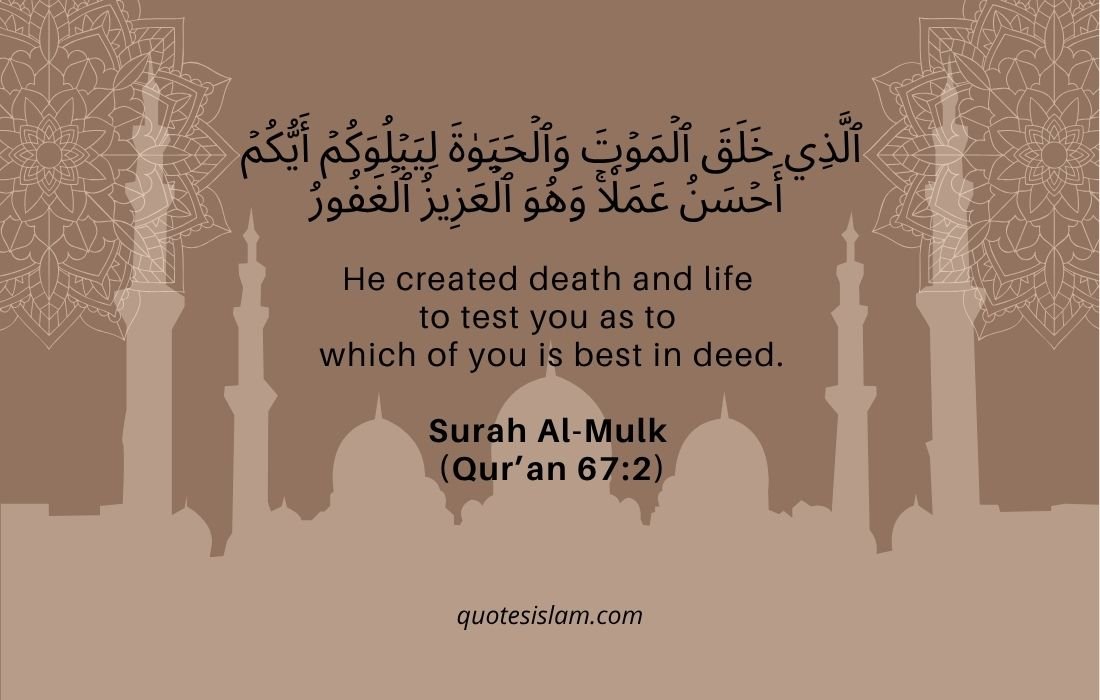
“He created death and life to test you as to which of you is best in deed.”
’’اس نے موت اور زندگی کو پیدا کیا تاکہ تمہیں آزمائے کہ تم میں سے کون اچھے عمل کرتا ہے‘‘۔
Tafsir:
This verse explains the purpose of life and death from an Islamic perspective.
Key insights from tafsir:
- Life is a test: Both life and death are created by Allah as part of a test to see how we live, act, and respond to His guidance.
- Focus on quality, not quantity: The verse says “best in deed”, not most deeds. This highlights sincerity, intention, and excellence in actions.
- Balance of fear and hope: Allah is described as Al-‘Aziz (All-Mighty) and Al-Ghafur (All-Forgiving), reminding believers to balance accountability with hope in His mercy.
- Purpose-driven living: This world is temporary, and every action carries meaning and consequence in the Hereafter.
Reflection
Life is not just about passing time—it’s about how well we use it. This verse reminds us to focus on sincere, meaningful actions that bring us closer to Allah.
Final Thought:
Life is a test of deeds, not just time spent. What truly matters is how sincerely we live and how well we align our actions with purpose and faith. Every moment is an opportunity to choose goodness, improve ourselves, and prepare for what comes after this temporary world.