Prophet Stories: Faith, Lessons & Divine Guidance
Prophet Stories: Timeless Lessons of Faith, Resilience, and Divine Guidance
Over 4 billion people across the globe anchor their moral lives to a set of narratives most of them first heard as children. Those narratives are prophet stories — and their psychological grip on human civilization has never weakened. Understanding why they endure, and how to draw practical wisdom from them, is one of the most underrated forms of personal development available to you right now.
Thank you for reading this post, don't forget to subscribe!Prophet stories are sacred accounts of individuals chosen by God to deliver divine guidance to humanity. They appear across the Quran, the Bible, and the Torah, and they share a structure so consistent it functions almost like a universal template for human resilience: a divine calling, fierce resistance, devastating hardship, and ultimate purpose fulfilled. That pattern isn’t coincidental. It mirrors the psychological reality of meaningful human struggle.
Why Prophet Stories Remain Relevant Across Every Generation
The staying power of prophetic narratives comes from their refusal to sanitize the human experience. These are not fairy tales where virtue is rewarded immediately and painlessly. They are accounts of real psychological suffering — doubt, betrayal, exile, imprisonment — endured by individuals who chose purpose over comfort.
According to a 2023 Pew Research Center report, over 4 billion people worldwide identify with Abrahamic faiths, all of which treat prophet stories as foundational texts. But the influence of these narratives extends far beyond formal religious practice. Martin Luther King Jr. built his civil rights rhetoric directly around the Exodus narrative. Nelson Mandela cited prophetic themes of justice and patient endurance throughout his writings. These stories shape secular moral discourse more than most people realise.
What makes prophetic accounts uniquely powerful is their specificity. They do not offer abstract principles — they show you a human being, with fears and flaws, making extraordinary choices under impossible pressure. That specificity is precisely what makes them psychologically useful. You are not reading about an ideal; you are reading about a journey.
The Universal Themes That Cut Across Religious Traditions
Regardless of which tradition you come from, prophetic narratives return repeatedly to the same core themes:
- Divine calling amid ordinary life — prophets were not born into positions of power; Moses was a shepherd, Muhammad was a merchant
- Resistance and rejection — every prophet faced fierce opposition from the communities they were sent to guide
- Suffering as preparation, not punishment — hardship consistently preceded the fulfilment of the prophetic mission
- Justice over personal safety — prophets confronted rulers, challenged exploitation, and defended the marginalised at significant personal cost
- Ultimate redemption — not always in worldly terms, but always in terms of lasting moral legacy
These themes resonate because they reflect authentic human psychology. They describe the arc of anyone who has ever tried to do something genuinely meaningful.
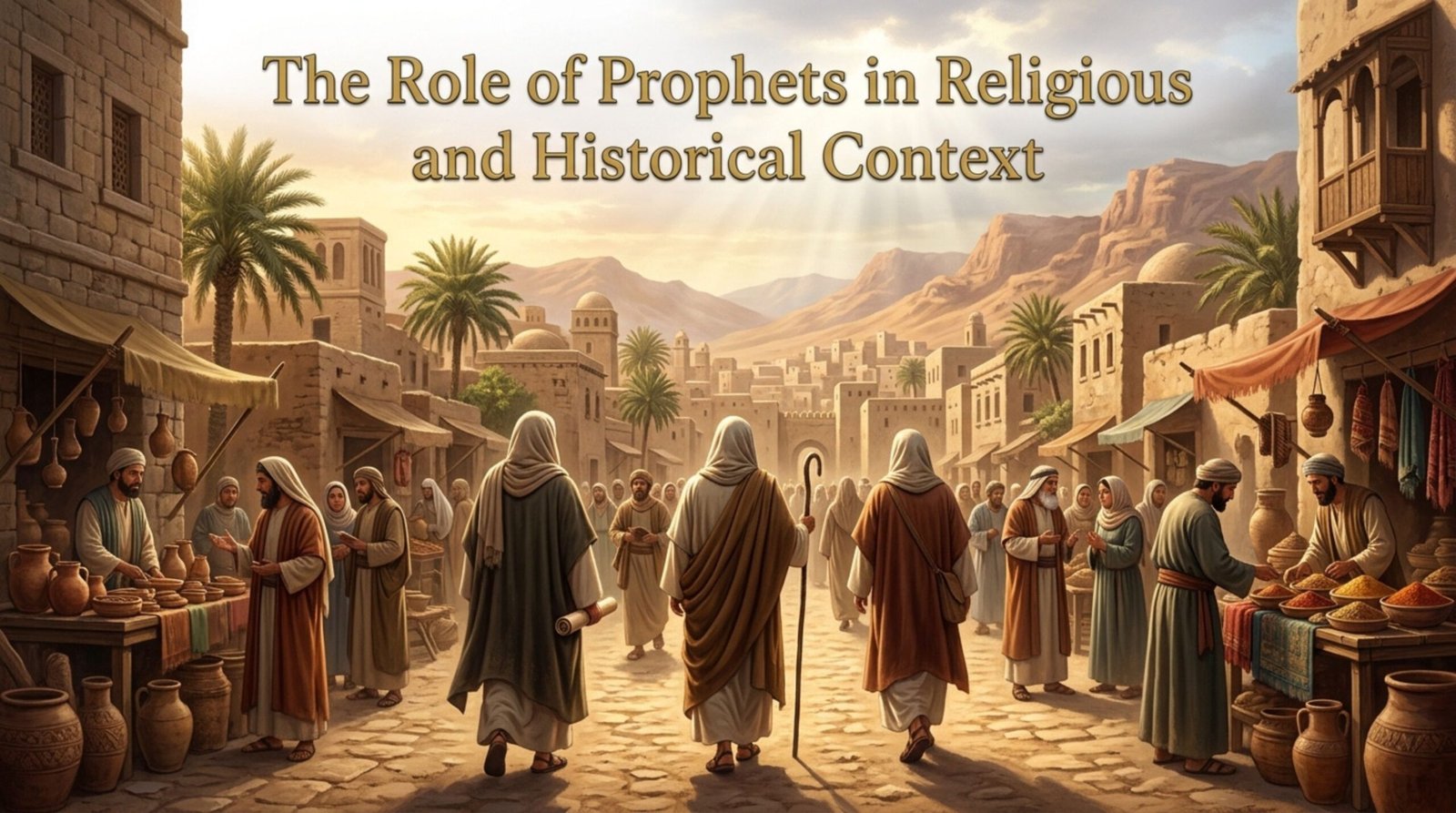
The Role of Prophets in Religious and Historical Context
Prophets were not simply religious teachers. They were social reformers, political disruptors, and moral architects whose influence restructured entire civilisations.
Islamic tradition names 25 prophets in the Quran, while the Hebrew Bible references over 55 prophetic figures. Their collective mission covered three interconnected functions: correcting moral deviation within communities, guiding societies toward systems of justice, and maintaining a living spiritual connection between humanity and the divine. In practice, this meant prophets regularly placed themselves in direct conflict with the most powerful institutions of their time.
The Ten Commandments delivered through Moses were not merely spiritual guidelines — they established foundational legal principles that modern legal scholars still trace through Western jurisprudence. Prophet Muhammad’s final sermon, delivered in 632 CE, articulated principles of human equality, women’s rights, and the abolition of racial hierarchy more than twelve centuries before the Universal Declaration of Human Rights.
How Prophetic Missions Shaped the Moral Architecture of Civilisation
The mistake most people make when engaging with prophet stories is treating them as historical curiosities rather than living frameworks. The moral codes introduced through prophetic missions did not simply describe a better way to live — they actively dismantled existing power structures and replaced them with justice-centred alternatives.
This is why these narratives have consistently been adopted by liberation movements. The prophetic tradition is, at its core, a tradition of speaking truth to power, and that function remains as relevant in the twenty-first century as it was three millennia ago.
Key Prophet Stories and the Lessons They Teach
Each prophetic narrative offers a distinct psychological and spiritual lesson. Read together, they form a comprehensive curriculum for navigating human adversity.
The Story of Prophet Ibrahim: Absolute Trust Under Trial
Ibrahim (Abraham) demonstrated complete trust in divine wisdom when commanded to sacrifice his son — an act that tested the very foundation of his belief. This narrative, honoured across Islam, Judaism, and Christianity, teaches that genuine faith sometimes requires surrendering what you love most to a purpose larger than yourself.
His willingness established him as the “Father of Monotheism,” a title recognised across all three Abrahamic traditions. The practical lesson here is not blind obedience but something more nuanced: the capacity to act on principle when every human instinct urges retreat.
The Story of Prophet Musa: Moral Courage in the Face of Power
Moses confronted one of history’s most powerful rulers — Pharaoh — with nothing but a divine mandate and a wooden staff. This story of prophetic leadership teaches that moral courage is not the absence of fear; it is acting decisively despite it.
In Islamic tradition, Moses appears more frequently in the Quran than any other prophet, referenced across more than 136 verses. His story covers leadership under crisis, grief, self-doubt, and the long patience required to guide a community through transformation. Professionally, his example is directly applicable to anyone navigating institutional resistance while trying to do what is right.
The Story of Prophet Yusuf: Patience and the Long Game
Joseph’s journey — from a betrayed son thrown into a well, to a slave, to a prisoner, to the most powerful official in Egypt — represents one of the most complete narratives on patience and resilience in all of sacred literature. The Quran describes it explicitly as “the best of stories” (Quran 12:3).
What makes Yusuf’s story exceptional is his response to injustice. He did not become bitter. He did not abandon his values when they cost him. He maintained dignity at every stage of his descent and used every position, no matter how degraded, to build the competencies that would eventually serve his purpose. For anyone navigating a career setback, a false accusation, or a prolonged season of apparent failure, this narrative offers a psychologically sophisticated framework for maintaining integrity without martyrdom.
The Story of Prophet Isa: Compassion as Radical Leadership
Jesus’s ministry demonstrated that spiritual authority operates through compassion rather than coercion. His consistent choice to engage with the marginalised — lepers, tax collectors, the poor, the socially excluded — established a model of mercy-centred leadership that directly influenced the development of modern social welfare institutions, hospital systems, and charitable organisations globally.
The lesson here is not passivity. It is that genuine power seeks to restore dignity rather than demand submission.
Common Themes Running Through All Prophet Stories
Every major prophetic narrative reinforces a specific set of principles that function as a unified moral framework.
Hardship precedes purpose. Ibrahim faced fire. Musa faced exile. Yusuf faced imprisonment. Muhammad faced persecution for thirteen years in Mecca before the circumstances of his mission shifted. This pattern is so consistent across prophet stories that it reads less like coincidence and more like a structural law of meaningful human endeavour.
Character under pressure defines legacy. The Arabic concept of sabr — patient perseverance — appears 90 times in the Quran. That frequency is deliberate. It signals that the capacity to remain grounded, purposeful, and morally intact under sustained adversity is not a secondary virtue; it is the central one.
Justice is not optional. Every prophetic mission ultimately served the cause of justice. Prophets confronted corrupt rulers, challenged exploitative economic systems, and consistently placed themselves between power and the vulnerable. These were not abstract ideals — they were costly, practical commitments made repeatedly under pressure.
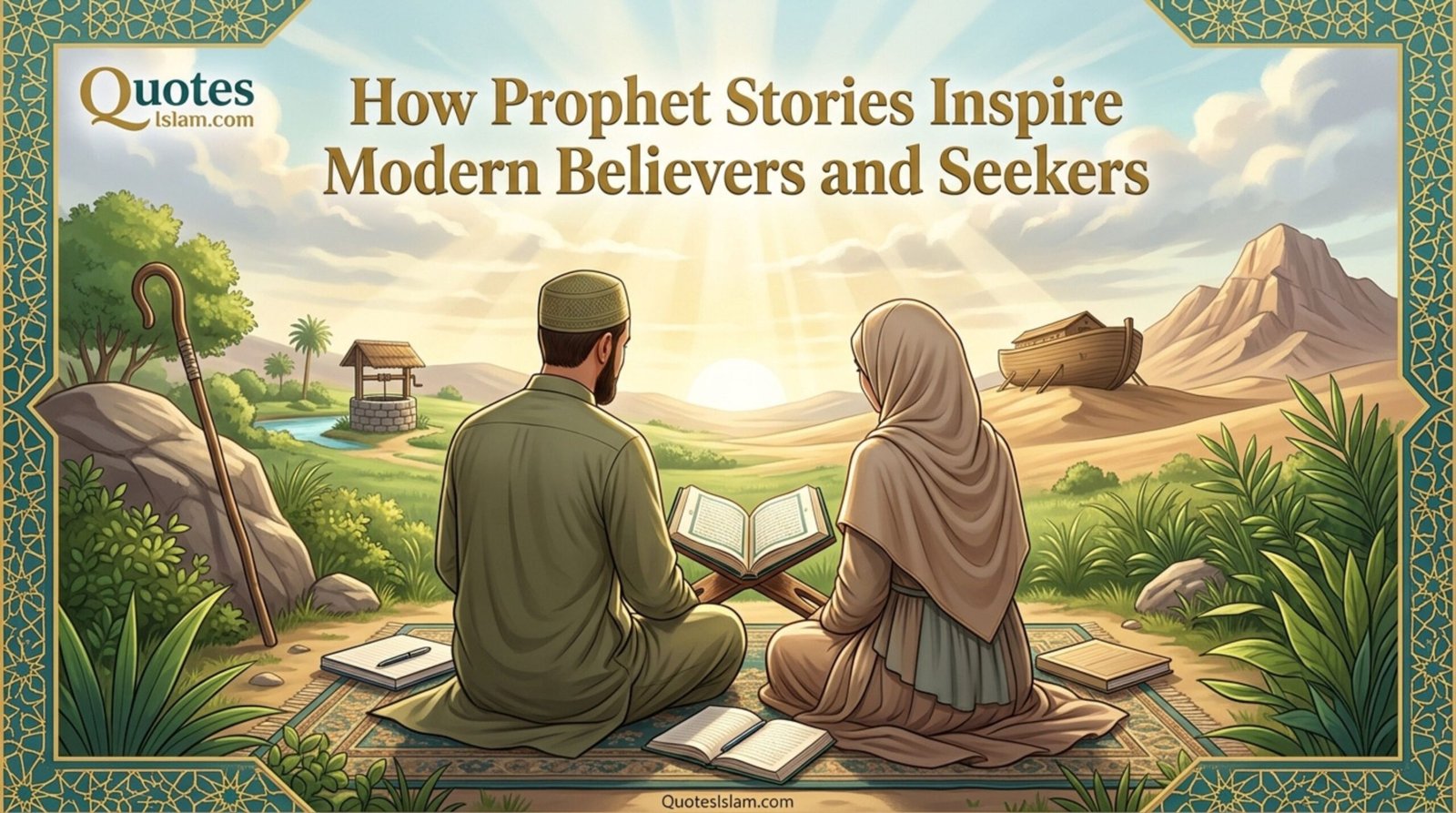
How Prophet Stories Inspire Modern Believers and Seekers
Here’s the thing: prophetic wisdom is not locked inside religious practice. Its principles translate directly into the practical challenges you face today.
- A professional navigating workplace injustice can draw from Yusuf’s model of maintaining integrity without bitterness
- A parent facing an agonising decision can apply Ibrahim’s framework of trust in a wisdom larger than their own understanding
- A leader facing institutional pressure to compromise can model Musa’s willingness to prioritise moral clarity over political convenience
- Anyone experiencing a prolonged season of apparent failure can use the structure of prophetic suffering — purposeful, temporary, and ultimately formative — as a reframe
Using Prophetic Narratives for Personal and Spiritual Growth
Regular, structured engagement with prophet stories builds three specific capacities: emotional intelligence (learning to read suffering without collapsing into it), moral clarity (developing the habit of asking what is right, not just what is convenient), and spiritual resilience (the ability to maintain purpose across extended periods of difficulty).
Scholars of Islamic psychology recommend journaling reflections on specific prophet stories during personal challenges — not as a passive reading exercise, but as an active attempt to identify directly applicable wisdom. This practice transforms prophet stories from historical accounts into living consultations.
How to Engage With Prophet Stories for Maximum Benefit
Start with primary sources. The Quran, Bible, and Torah each contain extended prophetic narratives that reward careful, slow reading. Supplement these with authoritative scholarly commentaries:
- Ibn Kathir’s Stories of the Prophets — considered one of the most authoritative classical Islamic references, drawing on Quranic exegesis and verified hadith
- The Anchor Yale Bible Commentary series — a rigorous scholarly resource for engaging with Hebrew and Christian prophetic texts
- Fazlur Rahman’s Prophecy in Islam — an academic examination of the theological and historical dimensions of Islamic prophethood
Once you have your sources, apply a simple weekly structure:
- Read one prophetic narrative in full — do not skim
- Identify three specific lessons that apply to your current circumstances
- Choose one concrete action you can take this week that embodies one of those lessons
- Review the following week: did the lesson hold under real-world pressure?
This structured approach converts passive reading into active transformation. The goal is not information accumulation — it is character formation.
Key Takeaways
- Prophet stories are foundational narratives across Islam, Christianity, and Judaism, followed by over 4 billion people globally — and their influence extends well beyond formal religious practice
- Every major prophetic narrative follows a recognisable structure: divine calling, resistance, hardship, and ultimately, purpose fulfilled — a pattern that mirrors the psychology of meaningful human endeavour
- The story of Prophet Yusuf is described in the Quran as “the best of stories” and offers one of the most sophisticated frameworks for navigating injustice, patience, and long-term resilience available in any literary tradition
- Prophetic wisdom is practically applicable — to leadership, parenting, professional life, and personal adversity — not merely to formal religious observance
- Consistent, structured engagement with prophet stories (reading, journaling, and applying specific lessons) produces measurable growth in emotional intelligence, moral clarity, and spiritual resilience
Frequently Asked Questions About Prophet Stories
What are prophet stories and why are they important in religious traditions?
Prophet stories are sacred narratives documenting the lives, missions, trials, and teachings of individuals chosen by God to deliver divine guidance to humanity. They are foundational to religious traditions because they provide concrete human examples of living by divine principles under genuine pressure. Rather than offering abstract theology, prophet stories demonstrate faith in action — showing believers how to navigate oppression, doubt, betrayal, and loss while maintaining spiritual and moral integrity. In Islam, Christianity, and Judaism, these narratives serve as the primary educational vehicle for transmitting core values across generations.
Which prophet story is considered the most widely referenced across all three Abrahamic faiths?
The story of Prophet Musa (Moses) is arguably the most widely referenced prophetic narrative across Islam, Christianity, and Judaism. His confrontation with Pharaoh, the Exodus, and the receipt of divine commandments appear in the Torah, Bible, and Quran with significant detail. In Islamic tradition, Moses is mentioned more frequently than any other prophet, appearing across more than 136 Quranic verses. Globally, his narrative has directly inspired political liberation movements, legal philosophy, and artistic works for over three millennia — making it one of the most influential stories in human history.
How can I use prophet stories to teach children about faith and morality?
Prophet stories are exceptionally effective tools for teaching children because they centre on relatable human characters facing concrete challenges — jealousy, fear, injustice, loss — before arriving at hard-won wisdom. Start with narratives that have clear emotional arcs, such as the story of Yusuf (Joseph), which children can follow as a journey of betrayal, patience, and forgiveness. Use storytelling rather than lecturing, ask children what they would have done in the prophet’s position, and connect each narrative to a specific value you want to reinforce. For structured resources, Ibn Kathir’s Stories of the Prophets has been adapted into numerous age-appropriate formats for children.