Ramadan and its Etiquette – 10 Best and Essential Islamic Principles
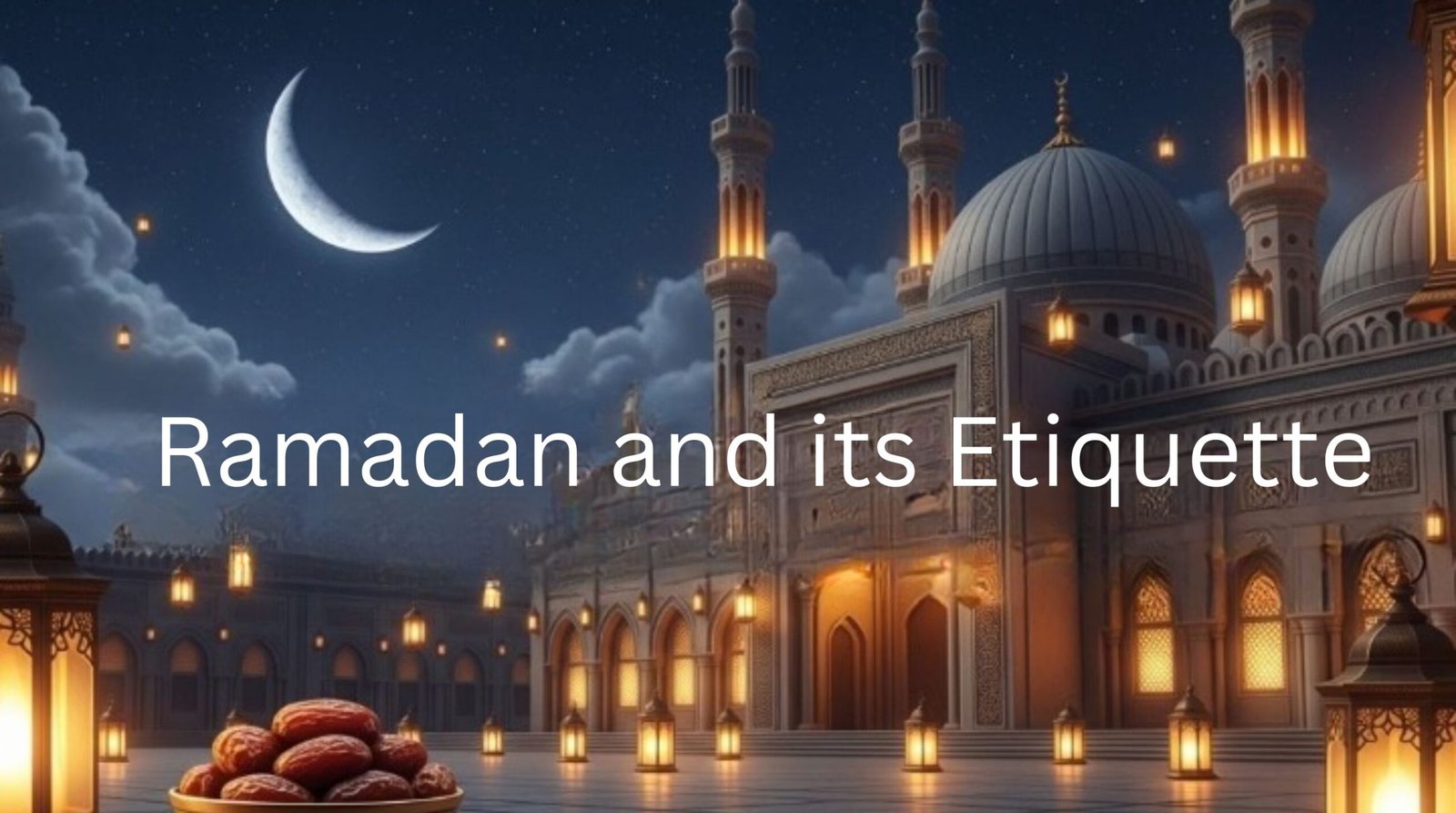
Ramadan and its Etiquette
Ramadan is a holy and revered month in Islam during which Allah the Almighty bestows countless blessings, mercy, and forgiveness upon His devotees. This sacred month is not just a time of fasting from dawn to dusk; instead, it is an entire spiritual training regimen that assists Muslims in cleansing their souls, fortifying their beliefs, enhancing their morals, and fostering a deeper connection with Allah.Throughout Ramadan, Muslims refrain from eating, drinking, and other physical cravings in devotion to Allah. In addition to fasting, they enhance their worship, read the Holy Quran, participate in charity, ask for forgiveness, and work towards becoming better individuals. It is a time for patience, thankfulness, self-control, and kindness.Allah the Exalted has designated Ramadan as a source of great rewards and blessings for the faithful. Anyone who dedicates this month earnestly to worship and obedience can achieve forgiveness, spiritual cleansing, and success in both this life and the next.
Thank you for reading this post, don't forget to subscribe!Allah the Most High states in the Holy Quran:
Ramadan and its Etiquette: Significance of Ramadan in Islam
Significance of Ramadan in Islam
Ramadan holds a special and esteemed place among all months in Islam. This is the month when the Holy Quran was sent down as a guide for humankind.
Allah the Exalted declares:
“The month of Ramadan during which the Quran was revealed, a guidance for humanity and evident signs of guidance and distinction.”
(Surah Al-Baqarah 2:185)
The importance of Ramadan can be grasped through these following blessings:
- The Holy Quran was disclosed in this month.
- The portals of Heaven are ajar.
- The doors of Hell are shut.
- The demons are restrained.
- The rewards for positive actions are amplified.
- Divine grace and pardon are bestowed upon the faithful.
- Laylatul Qadr, the Night of Decree, takes place during Ramadan.
The Messenger Muhammad ﷺ stated:
“At the start of Ramadan, the doors of Heaven are opened, the doors of Hell are shut, and the demons are bound.”
(Sahih al-Bukhari)
Consequently, Ramadan offers a wonderful chance to obtain Allah’s pardon and enhance one’s belief.
Blessings of Ramadan
- The Holy Quran was disclosed in this month.
- The portals of Heaven are ajar.
- The doors of Hell are shut.
- The demons are restrained.
- The rewards for positive actions are amplified.
- Divine grace and pardon are bestowed upon the faithful.
- Laylatul Qadr takes place during Ramadan.
Ramadan and its Etiquette: The Truth About Fasting
Numerous individuals believe that fasting solely refers to being deprived of food and drink. Nonetheless, Islam instructs that fasting encompasses significantly more than that. It is an entire framework for self-control and ethical cleansing.
An authentic individual observing a fast:
- Steers clear of dishonesty.
- Manages anger.
- Avoids speaking ill of others.
- Shields the eyes from immoral views.
- Protects the tongue from destructive words.
- Maintains the heart devoid of envy and animosity.
The Messenger Muhammad ﷺ stated:
“Those who do not refrain from falsehood and its actions, Allah has no need for them to abandon their food and drink.”
(Sahih al-Bukhari)
This Hadith illustrates that fasting aims to improve character and bolster moral principles.
Moral Benefits of Fasting
- Steers clear of dishonesty.
- Manages anger.
- Avoids speaking ill of others.
- Protects the tongue.
- Purifies the heart.
Ramadan and its Etiquette: Customs and Principles
Ramadan and its Etiquette: Genuineness of Purpose
Each act of devotion relies on genuine intent. A Muslim ought to fast exclusively to attain the satisfaction of Allah. Any longing for acclaim or acknowledgment from others diminishes the essence of worship.
Ramadan and its Etiquette: Daily Prayer Practice
The five daily prayers hold great significance in Islam. Fasting and prayer enhance one another. An individual who overlooks prayer cannot completely reap the spiritual rewards of Ramadan.
Muslims ought to strive to pray punctually and carry out their prayers with focus and reverence.
Ramadan and its Etiquette: Reciting the Holy Quran
Ramadan is recognized as the Month of the Quran. Muslims are encouraged to enhance their reading and contemplation of the Quran in this holy month.
Effective methods consist of:
- Reading a segment each day.
- Comprehending the significance of lines.
- Hearing the recitation of the Quran.
- Responding to Quranic guidance.
The deeper a believer engages with the Quran, the greater their spiritual development becomes.
Ramadan and its Etiquette: Steering Clear of Falsehoods and Slander
A key aspect of Ramadan etiquette is managing one’s speech.
A person who is fasting ought to steer clear of:
- Deceiving
- Rumors
- Gossiping about someone.
- Defamation
- Hurtful language
- Arguments
A clean tongue reveals a clean heart and boosts the benefits of fasting.
Ramadan and its Etiquette: Perseverance and Discipline
Ramadan is a time when we really have to be strong. When we are hungry and thirsty it teaches us Muslims how to deal with our feelings and what we want.
When someone makes us angry. Does something to upset us, a person who is fasting must remain calm and remember that they are doing it for Ramadan and, for Allah.
Ramadan and Allah are what make us stay in control and be patient.
Ramadan and its Etiquette: Regulations of Suhoor and Iftar
Suhoor Etiquette
- Have Suhoor prior to dawn.
- Postpone Suhoor for as long as you can.
- Incorporate wholesome and nourishing foods.
- Set your intention for fasting.
The Messenger ﷺ stated:
“Consume Suhoor, as there is surely blessing in Suhoor.”
(Sahih al-Bukhari)
Etiquette of Breaking the Fast
- End the fast right after sunset.
- Start with dates if they are accessible.
- If dates aren’t accessible, use water.
- Recite the dua for ending the fast.
- Refrain from consuming excessive amounts of food.
The Messenger ﷺ remarked:
“Individuals will continue to be virtuous as long as they rush to end the fast.”
(Sahih Muslim)
Adhering to these Sunnahs brings great benefits.
Ramadan and its Etiquette: Philanthropy and Assisting Others
Benefits of Charity During Ramadan
Ramadan fosters kindness and a spirit of giving.
The Prophet Muhammad ﷺ was the most charitable of individuals, and he became even more giving during Ramadan.
Charitable actions consist of:
- Nourishing individuals who are fasting.
- Assisting the underprivileged.
- Assisting orphaned children.
- Contributing to mosques and philanthropic institutions.
- Helping less fortunate family members and neighbors.
Advantages of charitable giving encompass:
- Fortunes in riches.
- Cleansing of the heart.
- Pardoning of transgressions.
- Assistance for individuals who require help.
A minor gesture of goodwill during Ramadan can bring significant blessings.
Ramadan and its Etiquette: Taraweeh Salah
Importance of Taraweeh Prayer
Taraweeh is among the most cherished forms of worship during Ramadan.
It offers a chance to:
- Hear the Quran.
- Stand in prayer before Allah.
- Enhance incentives.
- Reinforce belief.
Ramadan and its Etiquette: Significance of Dua and Istighfar
Best Times for Dua in Ramadan
Ramadan is a time when prayers are easily accepted.
Muslims ought to pray for:
- Individualized support.
- Pardon for transgressions.
- Guardians and relatives.
- Achievement in this life and the afterlife.
- The Islamic community.
Regular Istighfar (asking for forgiveness) softens the heart and brings a believer nearer to Allah.
Among the top prayers is:
Ramadan and its Etiquette: Laylatul Qadr – The Night of Decree
Importance of Laylatul Qadr
A remarkable blessing of Ramadan is Laylatul Qadr.
Allah states:
“The Night of Decree surpasses a thousand months.”
(Surah Al-Qadr 97:3)
Worship conducted on this night surpasses worship done for over eighty-three years.
Muslims are encouraged to look for Laylatul Qadr particularly in the final ten nights of Ramadan by:
- Prayer
- Recitation of the Quran
- Dua
- Istighfar
- Remembrance
Ramadan and its Etiquette: I’tikaf
Spiritual Benefits of I’tikaf
I’tikaf is an immensely fulfilling act of devotion carried out in the final ten days of Ramadan.
In I’tikaf, a faithful individual:
- Remains in the mosque.
- Concentrates solely on adoration.
- Steers clear of superfluous worldly pursuits.
- Enhances the recollection of Allah.
I’tikaf enhances the bond between a believer and their Creator.
Ramadan and its Etiquette: Spiritual Advantages of Ramadan
Ramadan and its Etiquette: Advancement of Taqwa
Fasting enhances awareness of Allah and promotes compliance with His directives.
Ramadan and its Etiquette: Cleansing of the Spirit
A faithful person learns to manage cravings and steer clear of wrongful deeds.
Ramadan and its Etiquette: Reinforcement of Belief
Elevated worship boosts belief and spiritual consciousness.
Ramadan and its Etiquette: Thankfulness
Feeling hunger cultivates gratitude for Allah’s gifts.
Ramadan and its Etiquette: Empathy for the Underprivileged
Fasting allows believers to empathize with the hardships faced by the less fortunate.
Ramadan and its Etiquette: Enhancement of Personality
Patience, compassion, modesty, and altruism grow more robust.
Ramadan and its Etiquette: Frequent Errors Made During Ramadan
Common Mistakes to Avoid
Sadly, certain individuals diminish the benefits of Ramadan by committing frequent errors like:
- Napping too much throughout the day.
- Wasting time on social networks.
- Ignoring prayers.
- Excessive eating during Iftar.
- Spending time on leisure activities.
- Participating in chatter and disputes.
- Disregarding the recitation of the Quran.
By steering clear of these errors, one can enhance the spiritual rewards of Ramadan.
Ramadan and its Etiquette: Making the Most of Ramadan
Practical Tips for a Productive Ramadan
To ensure Ramadan is fulfilling and beneficial:
- Establish a daily worship timetable.
- Conduct all prayers punctually.
- Practice Quran daily.
- Participate in Taraweeh consistently.
- Boost donations.
- Perform dua regularly.
- Assist relatives and those living nearby.
- Refrain from engaging in sinful actions.
- Exhibit proper etiquette.
- Pursue forgiveness continually.
Regularity in these actions can turn Ramadan into a transformative experience.
Ramadan and its Etiquette: The Key Message of Ramadan
Lessons Learned from Ramadan
The core significance of Ramadan is submission to Allah and personal transformation.
Ramadan instructs us to:
- Cultivate devotion.
- Enhance our persona.
- Reinforce belief.
- Assist others.
- Ask for pardon.
- Adhere to the principles of Islam.
It acts as a reminder that achievement arises from following Allah and genuine faithfulness.
Ramadan and its Etiquette: Final Thoughts
Ramadan and its practices are considered one of the most significant favors granted by Allah Almighty to the Muslim Ummah. This holy month offers a chance for spiritual cleansing, personal growth, forgiveness, and great blessings.
By means of fasting, praying, reciting the Quran, giving to charity, practicing patience, and genuinely repenting, believers can change their lives and get nearer to Allah. Ramadan is not just a month for devotion; it serves as a foundation for improving as Muslims and as individuals.
By adhering to the teachings and practices of Ramadan properly, this sacred month can enhance our earthly existence and our eternal life.
May Allah Almighty give us the strength to observe Ramadan with sincerity, reap its blessings, receive His forgiveness, and follow His guidance. Ameen.
Ultimately, all Muslims ought to integrate the teachings and manners of Ramadan into their daily lives to attain success in both this life and the everlasting life ahead.