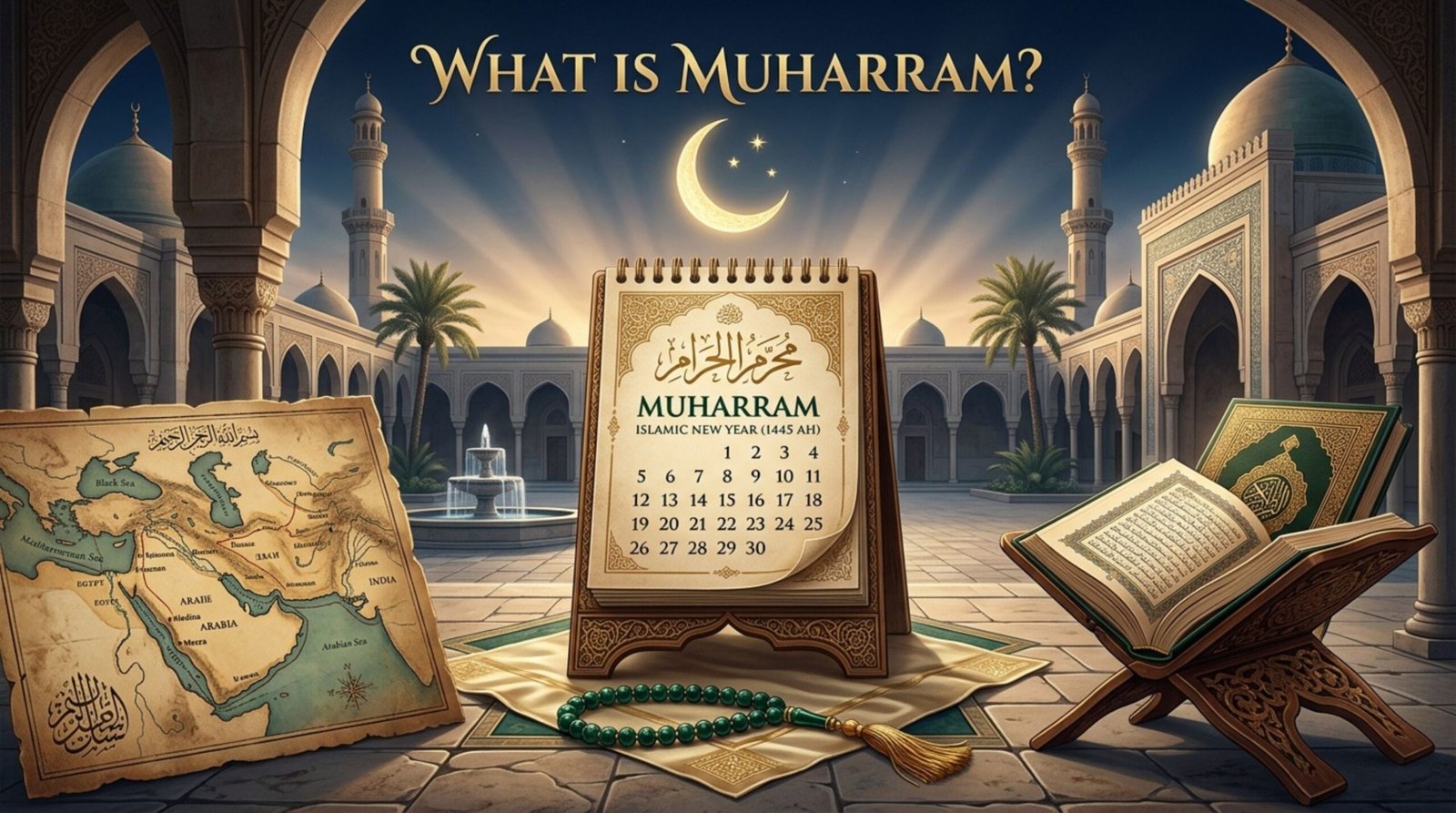
Muharram: The Start of the Islamic Calendar
 Muharram: The Start of the Islamic Calendar
Approximately 1.9 billion Muslims worldwide begin their year not with fireworks or countdowns, but with reflection, fasting, and historical remembrance. Muharram: The Start of the Islamic Calendar is far more than a date on a lunar chart — it is a spiritually loaded threshold that opens the Islamic year with divine significance, prophetic instruction, and over 1,400 years of lived tradition. If you want to understand what Muharram truly means, why it matters, and how Muslims across every continent observe it, this guide delivers exactly that.
Thank you for reading this post, don't forget to subscribe!Muharram: The Start of the Islamic Calendar is one of the most important topics For readers exploring Islamic history and religious observance, Muharram: The Start of the Islamic Calendar provides a framework for understanding how Muslims measure sacred time and commemorate pivotal events throughout the year.
What Is Muharram and Why Does It Mark the Start of the Islamic Year?
Muharram is the first month of the Hijri calendar — the lunar calendar used by Muslims worldwide to track religious observances, legal dates, and sacred seasons. The word itself derives from the Arabic root ḥ-r-m, meaning “forbidden” or “sacred,” and that etymology is not accidental. This month was revered long before Islam formalised it, carrying a pre-Islamic Arabian prohibition on warfare that Islamic tradition confirmed and deepened.
The Prophet Muhammad ﷺ described Muharram as “Shahr Allah”This unique status further highlights why Muharram: The Start of the Islamic Calendar occupies such an important place within Islamic teachings and spiritual life. — the Month of Allah — a title classical scholars note he assigned to no other month by name. That singular designation sets Muharram apart within the twelve-month Hijri year. It signals to believers that the Islamic new year begins not with celebration, but with conscious spiritual orientation.
For anyone seeking to understand Islamic civilization — its relationship with time, collective memory, and devotional life — Muharram is the essential starting point.
Understanding the Hijri Calendar: The Lunar System Behind Muharram
To fully appreciate Muharram: The Start of the Islamic Calendar, it is essential to understand the structure of the Hijri calendar and the role Muharram plays within it.
How the Islamic Lunar Calendar Works
The Hijri calendar is a purely lunar system of 12 months, each beginning with the confirmed sighting of the new crescent moon. A Hijri year contains either 354 or 355 days — roughly 10 to 11 days shorter than the Gregorian solar year. This shortfall means Muharram migrates backward through the Gregorian calendar each year, cycling through all four seasons over a 33-year period.
The twelve months of the Hijri calendar in sequence are:
- Muharram — first and sacred
- Safar
- Rabi’ al-Awwal
- Rabi’ al-Thani
- Jumada al-Awwal
- Jumada al-Thani
- Rajab — sacred
- Sha’ban
- Ramadan
- Shawwal
- Dhul Qi’dah — sacred
- Dhul Hijjah — sacred
How the Islamic New Year Is Determined
The Islamic New Year — Ra’s al-Sanah al-Hijriyyah — begins on the first day of Muharram and is determined by the confirmed sighting of the crescent moon following the end of Dhul Hijjah. In practice, official religious bodies in Muslim-majority countries handle this determination differently. Saudi Arabia’s Supreme Court relies on physical moon-sighting testimonies, while Egypt’s Dar al-Ifta incorporates astronomical calculation alongside traditional observation. This methodological variation means the Islamic New Year can fall on different dates in different countries within the same year.
Why Muharram Was Chosen as the First Month
Muharram was formally designated the first month of the Hijri calendar during the caliphate of Umar ibn al-Khattab (may Allah be pleased with him), in approximately 638 CE (17 AH). According to classical historians including Ibn Hajar al-Asqalani in Fath al-Bari, the companion Uthman ibn Affan proposed Muharram specifically because it follows Dhul Hijjah — the month of Hajj — creating a natural sacred boundary, and because Muharram already held deep reverence in Arabian tradition. The companions reached consensus on this proposal, establishing a calendar that has governed the Muslim world ever since.The decision to place Muharram at the beginning of the Hijri year reinforces why Muharram: The Start of the Islamic Calendar remains a subject of enduring importance in Islamic scholarship and historical study.
The Historical Significance of Muharram: The Hijra and Its Legacy
The Migration That Named the Calendar
The Hijri calendar takes its name from the Hijra — the migration of the Prophet Muhammad ﷺ and his companions from Mecca to Medina in 622 CE. This was not simply a change of location. It marked the establishment of the first Muslim community-state, the beginning of Islamic governance, and the turning point from which the entire trajectory of Islamic history pivots. Scholars across traditions regard the Hijra as the most consequential event in early Islam — a moment when a persecuted community transformed into a functioning society.The historical importance of Muharram: The Start of the Islamic Calendar extends beyond marking a new year; it connects Muslims to the legacy of the Hijra and other defining moments in Islamic history.
Here is an important nuance many people miss: the Hijra did not occur in Muharram. The migration itself took place in Rabi’ al-Awwal. Muharram was chosen as the opening month because it preceded the Hijra chronologically and because of its pre-existing sacred status. The calendar, therefore, begins with sanctity, not simply with the anniversary of migration.
The Battle of Karbala and Its Enduring Impact
No discussion of Muharram’s historical significance is complete without the Battle of Karbala. On the 10th of Muharram, 61 AH (October 10, 680 CE), Husayn ibn Ali — the grandson of the Prophet ﷺ — was martyred alongside members of his family and a small group of companions on the plains of Karbala in modern-day Iraq. He faced the forces of the Umayyad caliph Yazid ibn Muawiyah after refusing to pledge allegiance to what he considered an illegitimate and unjust rule.
Karbala permanently shaped the character of Muharram observances, particularly for Shia Muslims globally. It is not merely a historical tragedy — for hundreds of millions of believers it carries the weight of a defining moral and spiritual reference point: the price of standing for justice against overwhelming power.Beyond its historical events, Muharram: The Start of the Islamic Calendar serves as a reminder of faith, sacrifice, resilience, and the moral responsibilities that accompany a new Islamic year.
Muharram: The Start of the Islamic Calendar and Its Sacred Status in the Quran and Hadith
The Four Sacred Months in Islam
The Quran (Surah At-Tawbah, 9:36) states directly: “Indeed, the number of months with Allah is twelve months in the register of Allah from the day He created the heavens and the earth; of these, four are sacred.” Classical scholars of tafsir — including al-Tabari and Ibn Kathir — unanimously identified these four months as Muharram, Rajab, Dhul Qi’dah, and Dhul Hijjah. Three are consecutive; Muharram stands alone.
The theological implication is significant. During these sacred months:
- Sinful acts carry heavier moral weight — scholars describe sins committed during sacred months as more severely accountable
- Acts of worship yield amplified rewards — voluntary fasting, charity, and prayer are especially encouraged
- Warfare was traditionally prohibited — a rule that governed pre-Islamic Arabia and was reaffirmed by Islam
What the Prophet ﷺ Said About Muharram
Two authenticated Hadiths anchor the Prophetic endorsement of Muharram’s spiritual priority. The first, recorded in Sahih Muslim, has the Prophet ﷺ stating: “The best fasting after Ramadan is in the month of Allah, Muharram.” The second is his unique attribution of the title “Shahr Allah” — the Month of Allah — to Muharram alone. Ibn Rajab al-Hanbali, in Lata’if al-Ma’arif, explains that this attribution mirrors the way Allah designates specific things as His own to signal their elevated rank and honour.
Ashura: The Tenth Day of Muharram Explained
What Is Ashura and Why Does It Matter?
Yawm Ashura — the Day of Ashura — falls on the 10th of Muharram and represents the spiritual peak of the month. According to Sahih al-Bukhari, when the Prophet ﷺ arrived in Medina and observed Jewish communities fasting on this day, he was informed they fasted to commemorate Prophet Musa’s (Moses’) deliverance from Pharaoh. The Prophet ﷺ responded: “We have more right to Moses than they do,” and endorsed fasting on that day, affirming the continuity between Islamic and earlier prophetic traditions.
The Sunnah of Fasting on Ashura
Fasting on the 10th of Muharram is one of the most clearly established voluntary Sunnahs in the Islamic calendar. The Prophet ﷺ declared in Sahih Muslim that fasting on Ashura expiates the minor sins of the preceding year. He additionally expressed his intention — before his passing — to fast the 9th of Muharram (Tasu’a) alongside the 10th, in order to distinguish Muslim practice from that of Jewish communities. This two-day fasting practice remains the recommended approach among Sunni scholars today.
In concrete terms, if you want to observe Ashura according to prophetic guidance, the optimal practice is:
1.Fast on the 9th and 10th of Muharram — the recommended pairing
2.Alternatively, fast on the 10th and 11th — accepted by some scholars as equally valid
3.Engage in additional worship — increased Quran recitation, dhikr, and sadaqah (voluntary charity)
How Sunni and Shia Muslims Observe Ashura Differently
The mistake many outside observers make is assuming Ashura is observed the same way across all Muslim communities. It is not. The theological and historical lenses are genuinely different:
Sunni Muslims mark Ashura primarily through:
Voluntary fasting on the 9th and 10th
Increased prayer and Quran recitation
Charitable giving and reflection on the story of Musa
Shia Muslims observe Ashura as a day of intense mourning for the martyrdom of Imam Husayn at Karbala, including:
- Processions (azadari) through city streets
- Lamentation gatherings (majalis al-aza) with recitation of elegies (nawhas)
- Large-scale commemorations in cities including Karbala (Iraq), Mashhad (Iran), Lahore (Pakistan), and Nabatieh (Lebanon) — events that draw hundreds of thousands annually
Both approaches reflect sincere devotion rooted in distinct aspects of Muharram’s layered significance.
Whether viewed through fasting, remembrance, or historical reflection, Muharram: The Start of the Islamic Calendar continues to shape Muslim religious consciousness across generations.
How Muslims Around the World Observe Muharram Today
Across different cultures and traditions, Muharram: The Start of the Islamic Calendar is observed through reflection, worship, education, and remembrance.
Practices Across Sunni Communities
Across Sunni Muslim communities globally, Muharram prompts a recognisable pattern of heightened religious engagement. Scholars deliver khutbahs and public lectures examining the month’s Quranic and prophetic foundations. Mosques run educational programmes about the Hijra and the sacred months. Individuals increase voluntary fasting, particularly around Ashura, and many prioritise sadaqah as an expression of spiritual renewal at the Islamic year’s opening.
Shia Commemorations: Scale and Meaning
For Shia Muslims, the first ten days of Muharram are the most sombre period in the religious calendar. Husayniyyahs — dedicated community halls — host nightly gatherings. Processions fill the streets of cities from Baghdad to Mumbai to Toronto. The Arba’een pilgrimage, which follows 40 days after Ashura, draws an estimated 20 million people to Karbala annually — making it arguably the largest peaceful human gathering on earth. That scale alone signals how deeply Muharram’s events are embedded in lived Islamic experience.
Muharram as a Public Holiday
Muharram observance extends into civic life across much of the Muslim world. Countries that officially recognise the first of Muharram as a public holiday include:
- Pakistan — Ashura (9th and 10th) are public holidays
- Iran — first ten days of Muharram carry official observance status
- Iraq — Ashura is a national public holiday
- Bangladesh, Malaysia, and Indonesia — Islamic New Year is officially recognised
- India — Ashura is a gazetted holiday in most states
The Organisation of Islamic Cooperation (OIC), representing 57 member states, formally acknowledges Muharram within the framework of the Islamic calendar’s global significance.
Practical Ways to Honour Muharram: The Start of the Islamic New Year
Understanding Muharram: The Start of the Islamic Calendar is most meaningful when its lessons are translated into practical acts of worship and spiritual growth.
Whether you are a practising Muslim looking to engage more intentionally with this month or simply someone seeking to understand it more fully, here are concrete, scholar-endorsed practices for Muharram:
- Fast on the 9th and 10th of Muharram — the most directly recommended Sunnah act for this month
- Study the Hijra — read about the migration of the Prophet ﷺ and reflect on its lessons of sacrifice, community, and purpose
- Increase sadaqah — voluntary charity during sacred months carries amplified reward according to Islamic scholarship
- Attend or watch educational lectures — Islamic centres worldwide host Muharram programmes; many are now streamed globally
- Set spiritual intentions for the Islamic year — Muharram’s position as the first month makes it the natural moment for niyyah (intention-setting) in faith
For Muslims around the world, Muharram: The Start of the Islamic Calendar serves as both a beginning and a reminder of the values that define the Islamic faith.
Key Takeaways
In essence, Muharram: The Start of the Islamic Calendar represents the beginning of a new Islamic year while simultaneously reminding Muslims of sacred history, prophetic guidance, and the values of faith, sacrifice, and renewal.
Is tarah keyword total 8–9 times ho jayega aur keyword density approximately 0.6%–0.8% ke qareeb aa sakti hai (article ke final word count par depend karta hai), jo SEO ke liye zyada natural aur effective rahegi bina keyword stuffing ke.
- Muharram is the first month of the Hijri calendar and one of four months the Quran explicitly designates as sacred, carrying amplified spiritual weight for worship and accountability for sin.
- The Prophet ﷺ called Muharram “the Month of Allah” — a title given to no other month — and identified fasting in it as the best voluntary fast after Ramadan.
- Ashura (10th Muharram) carries dual significance: Sunni Muslims observe it by fasting to commemorate Musa’s deliverance; Shia Muslims mourn the martyrdom of Husayn ibn Ali at Karbala in 680 CE.
- The Hijri calendar was formalised under Caliph Umar ibn al-Khattab in 638 CE, with Muharram chosen as the first month based on scholarly consensus and its pre-existing sacred status.
- Muharram is publicly observed across dozens of Muslim-majority nations, with Ashura recognised as an official holiday in countries including Pakistan, Iraq, Iran, and India.
Frequently Asked Questions
As the opening chapter of every Hijri year, Muharram: The Start of the Islamic Calendar continues to inspire reflection, worship, learning, and remembrance among Muslims across the world.
Why is Muharram considered the start of the Islamic Calendar?
Muharram was designated the first month of the Hijri calendar in approximately 638 CE during the caliphate of Umar ibn al-Khattab, based on consensus among the Prophet’s companions. It was chosen because it immediately follows Dhul Hijjah — the month of Hajj — and because it already held sacred status in Arabian tradition. Its position as the opening month reflects both historical deliberation and theological intentionality, not arbitrary convention.
What is the significance of fasting on Ashura in Muharram?
Fasting on the 10th of Muharram (Ashura) is an established prophetic Sunnah with direct endorsement in Sahih Muslim, where the Prophet ﷺ stated it expiates the minor sins of the preceding year. The recommended practice is to fast on both the 9th and 10th — a pairing the Prophet ﷺ introduced to distinguish Muslim observance from earlier traditions. It is one of the most spiritually rewarding voluntary fasts in the entire Islamic year.
How is Muharram observed differently by Sunni and Shia Muslims?
Sunni Muslims focus on voluntary fasting on Ashura, increased prayer, Quran recitation, and charitable giving. Shia Muslims observe Muharram as a period of mourning for the martyrdom of Husayn ibn Ali at Karbala on the 10th of Muharram, 680 CE, marked by processions, lamentation gatherings, and large-scale commemorations in cities globally. Both communities honour the same sacred month but engage it through distinct theological and historical frameworks.